Six pitfalls in organizational change: Insights from Digiworld
Hannah Dang
August 27, 2024 | 10:28 AM GMT+7
Business leaders often stumble in managing organizational change, according to Digiworld's Vice President To Hong Trang, who cited the 5W1H formula as a framework.
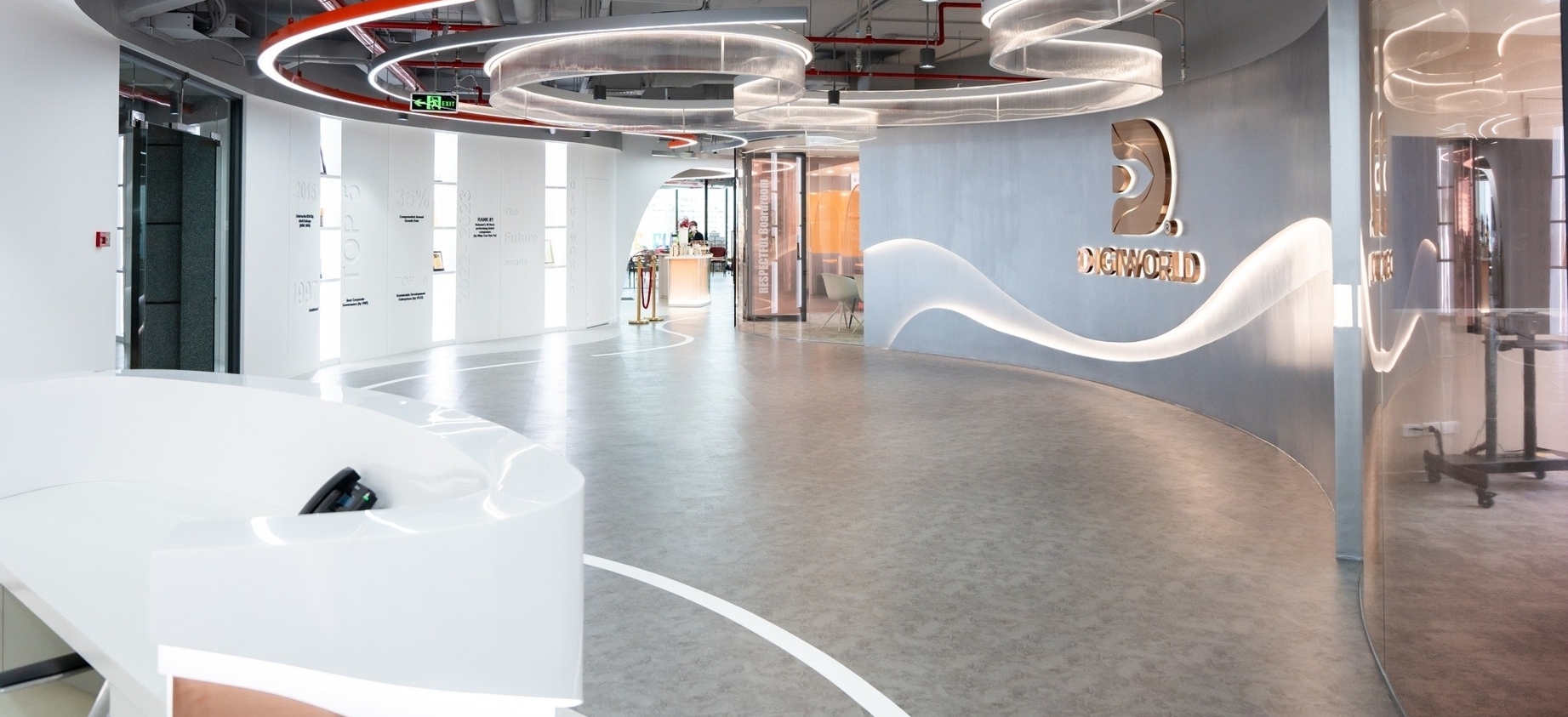
Digiworld, a leading Vietnamese digital services company, moved to a new office in June 2024, adopting a non-fixed seating arrangement where employees can choose their workspace daily.
The new culture emphasizes cleanliness, orderliness, and minimalism, with workspaces being completely reset at the end of each day. The company provides personal lockers, food storage spaces, and areas for coffee and relaxation. However, any items left behind after work hours are considered donations.
Trang highlighted that the company’s new policies require full compliance from everyone, including senior management. "Even though I have a private office, by the end of the day, my desk is also clear," she said, illustrating the company’s commitment to its new cultural norms.
Digiworld's office
Six common mistakes based on the 5W1H framework
Trang referenced research from the NeuroLeadership Institute, noting that while 85 per cent of leaders agree that a culture of rapid adaptation is necessary to encourage innovation and flexibility, only 30 per cent of change efforts achieve their goals. She identified six key mistakes leaders make during organizational change, aligned with the 5W1H framework.
Why - The reason for change
Leaders often implement changes due to external pressures without explaining the rationale or benefits to employees. When employees are accustomed to existing processes, they are unlikely to embrace change unless they see clear value in it. Trang emphasized the importance of clearly communicating the reasons for change, the potential consequences of inaction, and the benefits for both the company and its employees.
What - What needs to change
In a rapidly changing world, leaders may introduce numerous changes without prioritizing them, leading to failures due to a lack of focus. Trang recommended that companies prioritize changes based on strategy and operational realities. "To succeed, focus on one change at a time," she advised.
Who - Stakeholders involved
To Hong Trang, Vice President of Digiworld
A common mistake is failing to assess whether a change benefits the majority or impacts the organization’s core operations. Changes that do not consider the broader impact or are not implemented uniformly can lead to failure. Trang stressed that changes should benefit the majority and be applied across the entire organization.
When - Timing of implementation
Leaders often skip small-scale trials before rolling out changes organization-wide, leading to ineffective implementation and unrealistic expectations for immediate results. Trang suggested that companies should first test changes on a smaller scale and be patient, as some changes may take years to demonstrate their full effectiveness.
Where - The environment for change
Trang warned that if a new change is implemented without creating an environment conducive to it, relying on old processes and culture, the change is unlikely to succeed. Instead, companies should create a new environment that supports the change, including new processes, policies, and training programs.
How - The approach to change
An ineffective approach is when leaders decide on the method of organizational change without consulting the team responsible for implementation. Trang shared an example of a friend who invested in a pulley system for transporting construction materials but found that workers were faster using traditional methods. The lesson was that those involved in execution should propose the method to ensure feasibility and effectiveness.
Digiworld encourages leadership to let their teams propose methods for organizational change and then collaboratively select the most effective option. The company conducts annual employee training and evaluates adherence to core values using the 5W1H communication system. Since 2015, Digiworld has maintained internal communication programs and competitions promoting the value of “efficiency.”
Phu Thai Holdings has successfully maintained strong profit growth despite the crisis, thanks to its enhanced core capabilities and accelerated development strategy.
Phu Thai Holdings has successfully maintained strong profit growth despite the crisis, thanks to its enhanced core capabilities and accelerated development strategy.
Menas Group is spearheading a series of training and human resource development partnerships to support its aggressive expansion into the retail and service sectors.
The story of BEST Express reflects a shift in the logistics industry toward building operational platforms grounded in technology, data, and partner ecosystems.
At 25, Tuan Le is running a profitable short-form video startup, expanding into international markets and setting his sights on building a billion-dollar business in digital marketing.