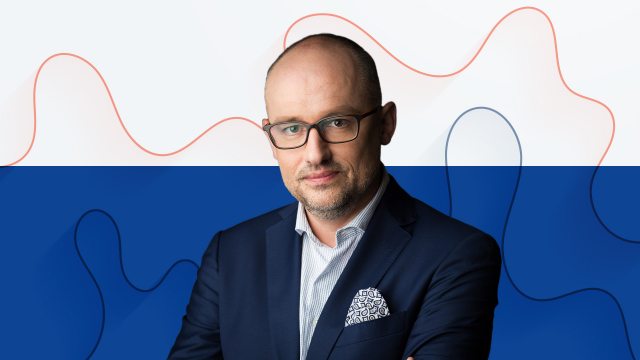
DEEP C’s edge in attracting the next generation of FDI
By Hannah Dang
October 29, 2026 | 10:30 AM GMT+7
DEEP C has built an industrial ecosystem capable of meeting the increasingly demanding requirements of next generation foreign direct investment.
Winning investors’ trust
In late July 2026, LG Innotek received its investment registration certificate for a $1 billion project at DEEP C Haiphong 2. Covering approximately 33 hectares, the project will involve the construction of a semiconductor substrate manufacturing facility, with construction scheduled to begin in the third quarter of 2026 and mass production expected to commence in the third quarter of 2028. The facility will be LG Innotek's first semiconductor substrate manufacturing plant outside South Korea, adding a new link to the company's semiconductor value chain in Vietnam.
Having operated a camera module manufacturing complex in Haiphong for years, LG Innotek has developed an in depth understanding of the local investment environment and the capacity to execute projects in the area. As the company moves into a field with more demanding requirements for technology, infrastructure and supply chains, it has set stringent criteria for its new investment location.
According to Koen Soenens, Sales, Customer Service and Marketing Director at DEEP C, infrastructure quality is always among the first considerations for large scale projects. Reliable electricity and water supplies, dependable utilities, logistics connectivity and readily available land form the foundation for factories to operate continuously over many years.
Beyond these fundamental requirements lies trust, an intangible factor that can have a direct bearing on long term investment decisions.
Businesses need confidence in the investment environment and local authorities, as well as in the transparency, efficiency and timeliness of administrative procedures. They also need assurance that commitments made today will continue to be honoured in the years ahead.
Explaining the decision to locate the new project at DEEP C, Park Hong Keun, General Director of LG Innotek Vietnam Haiphong Co., Ltd., highlighted the availability of a highly skilled workforce, an open investment environment, and close cooperation among the government, relevant authorities and businesses.
For an investment worth billions of dollars, companies must look beyond the cost of bringing a project into operation. They must also assess their ability to sustain production, expand capacity and adapt to market changes over the long term. This makes it essential to work with an industrial park developer capable of providing support throughout the entire investment lifecycle, from site selection and project implementation to ongoing operations.
DEEP C Haiphong 2 was selected because it met these requirements, from its industrial infrastructure and connectivity with the semiconductor supply chain to its operational efficiency.
“At DEEP C, we always see ourselves as a long term partner to investors,” Koen said.
Beyond land lease rates, construction readiness and tax incentives, global manufacturers are increasingly assessing access to renewable energy, supply chain resilience, the availability of technical talent in the years ahead, geopolitical risks and the ability to meet environmental, social and governance (ESG) requirements.
These considerations are particularly important as businesses seek to balance cost efficiency with the ability to maintain operations amid increasingly unpredictable disruptions.
An established ecosystem with the necessary connections in place can shorten the process of setting up operations, allowing businesses to concentrate their resources on core activities.
“Businesses are shifting from seeking low-cost production locations to building resilient manufacturing networks that can adapt to disruptions and maintain long-term competitiveness,” Koen noted.
Koen Soenens, Business Development, Marketing and Customer Service Director at DEEP C, with a partner.
The core strength of a circular industrial ecosystem
For LG Innotek, the new project will be its first semiconductor manufacturing facility outside South Korea. For DEEP C, it represents one of the largest investments the industrial park developer has ever attracted, as well as the culmination of nearly three decades of pursuing a vision for eco industrial real estate in Vietnam.
That journey began with Dinh Vu Industrial Zone in 1997. DEEP C has since expanded into a complex of five industrial parks spanning approximately 3,400 hectares across Haiphong and Quang Ninh. Alongside its industrial land portfolio, the developer has continuously invested in port facilities, wastewater treatment, energy infrastructure and manufacturing support services, creating an increasingly comprehensive industrial environment for businesses.
DEEP C began integrating resource efficiency and emissions reduction into its infrastructure development strategy well before these considerations became mainstream requirements among international investors.
As businesses place greater emphasis on ESG performance and resource efficiency, these capabilities are already embedded in the industrial park system and available to support manufacturing operations.
Water management illustrates this approach. In November 2025, DEEP C partnered with UNDP Vietnam and the Embassy of the Netherlands to launch a pilot project for industrial wastewater reuse, combining nanofiltration membrane technology with reverse osmosis (RO).
By July 2026, the pilot system at DEEP C Haiphong 1 had demonstrated the capacity to reuse approximately 1,000 cubic metres of water per day, with potential applications including industrial cooling and solar panel cleaning.
Ecological development at DEEP C
Energy infrastructure is also being developed to give industrial parks greater control over their energy resources. Wind power and rooftop solar have been integrated into the internal electricity system, while a microgrid model is being developed to manage on site energy sources alongside the national grid.
By managing electricity, water and other essential resources more efficiently at the industrial park level, manufacturers gain greater scope to control costs, reduce the risk of operational disruptions and meet increasingly stringent environmental requirements.
DEEP C's approach has also been tested through the Global Eco Industrial Parks Program me (GEIPP), implemented by the United Nations Industrial Development Organization (UNIDO) in coordination with Vietnam's Ministry of Finance. At the end of the program's first phase in April 2024, DEEP C Haiphong 1 met 52 of the 64 applicable indicators under the International Framework for Eco Industrial Parks.
Of the 138 resource efficiency and cleaner production measures proposed, 15 companies implemented 65 measures, saving more than 4.8 million kWh of electricity and nearly 2 million kilograms of liquefied petroleum gas (LPG), while reducing annual carbon dioxide emissions by more than 3,000 tonnes.
While the first phase focused on improving resource efficiency within individual businesses, the next phase places greater emphasis on connections between companies. Running from 2025 to 2028, GEIPP II aims to help DEEP C integrate circular economy principles more deeply into industrial park operations, creating resource loops and new opportunities for intercompany collaboration.
DEEP C is translating this approach into practice through DEEP C Connect, a platform designed to link business needs with available resources across the industrial ecosystem. By connecting data on resource requirements, surplus materials and underutilised assets, the platform helps identify potential areas for cooperation and creates opportunities to return resource flows to the production cycle.
“At DEEP C, we actively promote these connections because we believe an industrial park should be more than a collection of factories. It should be a genuine business community,” Koen Soenens said.
DEEP C is developing an ecosystem that connects business needs with available resources.
When businesses are connected through data on their needs and resources, relationships within an industrial park can extend beyond shared infrastructure to include materials, energy, services and supply chains. This enables DEEP C to create additional value from resources already available within its ecosystem.
For high technology industries such as semiconductors, the value of this ecosystem becomes even more apparent. Projects with long investment horizons typically require multiple layers of support beyond those needed by a standalone factory. In addition to available land and ready infrastructure, future expansion depends on the presence of supply chain partners, technical talent, reliable energy and other resources that can scale alongside manufacturing operations.
As industrial land increasingly becomes merely the starting point, the competitive advantage in attracting the next generation of FDI will lie in the ability to create a stable manufacturing environment, use resources efficiently, integrate deeply into supply chains and provide room for long term growth.
For Koen Soenens, Sales and Marketing Director at DEEP C, empathy is a compass that guides major deals, the way a leader builds a team, and the ambition to create a sustainable industrial zone that carries a Vietnamese identity.
For Koen Soenens, Sales and Marketing Director at DEEP C, empathy is a compass that guides major deals, the way a leader builds a team, and the ambition to create a sustainable industrial zone that carries a Vietnamese identity.
Vietnam accounts for only a small fraction of WHA Corporation’s revenue, yet the market is emerging as one of the Thai industrial developer’s key growth priorities.
Under the theme “All you need - knowledge, technology, supply and networking,” Horecfex Vietnam 2026 was designed as an ecosystem rather than a standalone exhibition or conference.
The cooperation agreements between PVI Insurance and Tasco Insurance, Savico, VETC Digital and Carpla Service mark a new step in connecting insurance capabilities with technology, automotive distribution and after-sales services, creating broader opportunities to serve customers across Tasco’s ecosystem.